Supplement overdose prevention: Compare nutrient sources
"Too much of a good thing can become a burden on the body."
Managing your supplement intake requires a careful balance between addressing specific needs and avoiding excessive levels. This guide provides strategies for supplement overdose prevention and helps maintain a healthy nutrient balance.
Key takeaways include monitoring therapeutic doses, understanding dietary contributions, and recognizing when specific needs dictate higher intake.
How do I manage supplement overdose prevention?
At dusk in the quiet kitchen, I squint at the tiny print on the bottle to ensure I do not exceed my daily supplement limit.
A person stands in a kitchen, carefully reading the label of a bottle while comparing it to a daily planner. They must ensure that their supplement intake does not exceed safe upper limits.
According to the National Migraine Centre, the American Academy of Neurology stated in its 2012 guidelines that high-dose riboflavin (400 mg) is "probably effective and should be considered for migraine prevention."
Managing supplement overdose prevention involves understanding the difference between dietary intake and therapeutic supplementation. While some conditions require specific levels, taking too much can lead to toxicity.
For instance, the American Academy of Neurology stated in its 2012 guidelines that high-dose riboflavin (400 mg) is "probably effective and should be considered for migraine prevention." This specific dosage is a targeted intervention rather than a general daily supplement.
A mineral intake guide should always account for the nutrients already present in your meals. For example, canned fruit punch with added nutrients contains 38 mg of sodium and 29.6 mg of vitamin C per 100g. If you consume these regularly, your total intake changes.
You must track these values to avoid accidental accumulation.
- Review your current intake of all vitamins and minerals. 2. Identify any overlapping ingredients between different products. 3. Adjust your regimen to avoid exceeding safe upper limits.
Can I use a vitamin excess risk strategy?
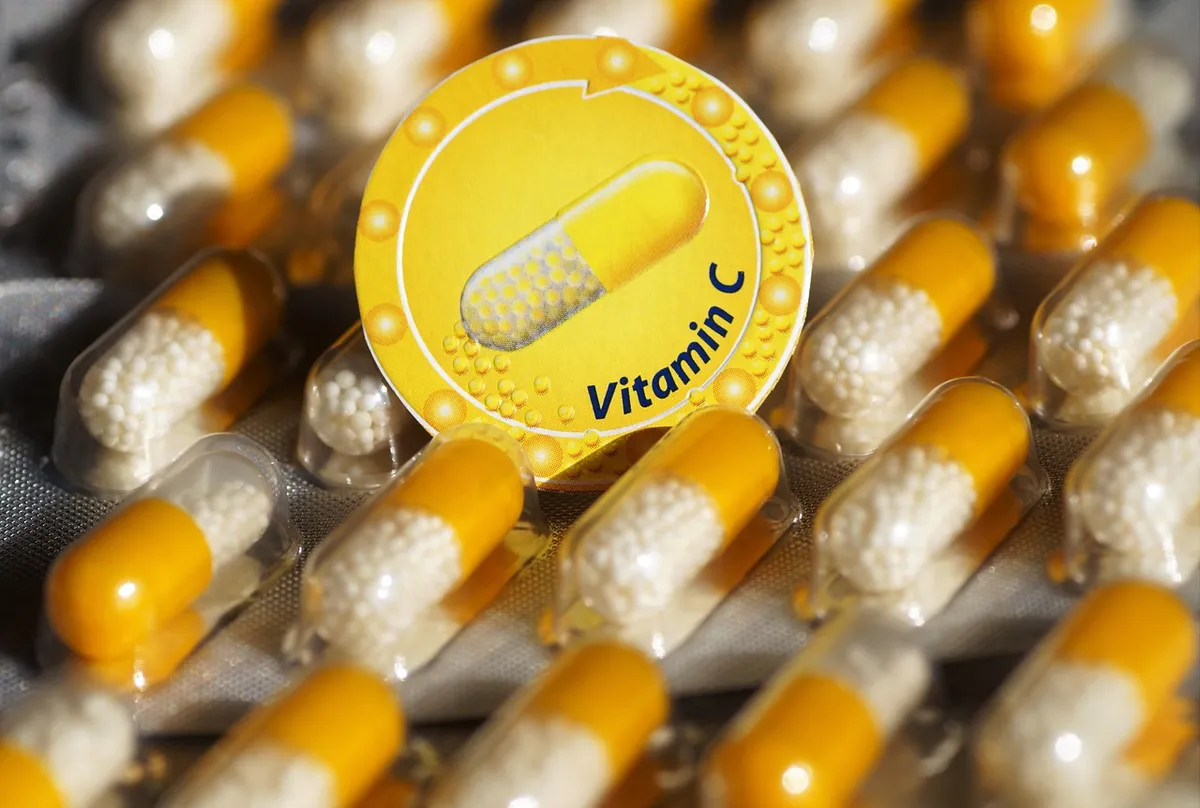
Sitting at the wooden desk at noon, I carefully sort every pill to develop a foolproof strategy against a dangerous supplement buildup.
A person sits at a desk, organizing various vitamin bottles into labeled containers to prevent confusion. They look at the different colors and strengths of the pills. Based on data from USDA FoodData Central, a canned fruit punch drink with added nutrients contains 29.6mg of vitamin C per 100g.
Identifying vitamin excess risk requires a clear overview of your total daily consumption. Many vitamins are water-soluble, but others can build up in the body and cause harm. A supplement safe use approach focuses on matching intake to your unique biological requirements.
It is helpful to recognize that different food sources provide different levels of the same nutrient. For instance, a canned fruit punch without added nutrients contains 0.4 mg of vitamin C per 100g, whereas a version with added nutrients provides 29.6 mg.
This difference shows how much a single beverage can impact your daily totals.
In this sequence, the first step is the most critical.
What is a practical supplement safe use method?
A person holds a single capsule in their hand, looking at the bright light through the translucent pill. They decide whether to take it now or later. According to the CDC, there was an investigation update regarding an infant botulism outbreak linked to infant formula in November 2025.

A supplement safe use method relies on consistency and documentation. You should maintain a log of every supplement, vitamin, and fortified food you consume. This prevents the mistake of taking multiple products that contain the same active ingredients.
- Review all current supplements and their active ingredients. 2. Compare the dosage on the label to your personal health goals. 3. Cross-reference these amounts with your daily food intake.
I once checked my own cabinet and realized two different brands of multivitamins contained identical levels of zinc. This realization made me much more careful about mixing products.
How does a nutrient dosage help guide my choices?
A person uses a small scale to weigh out powder, carefully leveling it off with a spatula. They look closely at the measurement to ensure accuracy.
A nutrient dosage help strategy involves setting clear targets based on professional advice. It is not always about taking more; sometimes it is about taking exactly enough.
For example, a diet rich in carbohydrates, fats that provide 10% of the total caloric needs, and proteins that provide 15% of the caloric needs can prevent kwashiorkor.
| Nutrient Type | Example Concentration | Importance |
|---|---|---|
| Added Nutrients | 29.6 mg Vitamin C | High concentration in fortified drinks |
| Natural Nutrients | 0.4 mg Vitamin C | Lower concentration in standard drinks |
This comparison shows how much the "added" component changes the nutritional profile of a food item.
What are the limitations of supplementation?

A person looks out a window, contemplating the complexity of health and the limits of a single pill. They put the bottle down on the table.
A limitation of any supplement strategy is that it cannot replace the complex synergy of whole foods. While a high-dose riboflavin (400 mg) may be considered for migraine prevention, such interventions are specific to certain conditions and are not a universal solution for all health issues.
- How do I manage supplement overdose prevention?
- Can I use a vitamin excess risk strategy?
- What is a practical supplement safe use method?
This part also covers Daily supplement plan.
This part also covers Body nutrient needs.
This part also covers Doctor advised dosing.
Daily supplement plan
Related
How can I avoid taking too much of a good thing?
Avoiding much excess requires comparing the amount of nutrients in fortified foods against the levels in your supplements. You must account for the 29.6 mg of vitamin C found in fortified fruit punch when calculating your daily totals.
If you do not subtract these amounts from your supplement targets, you risk exceeding safe limits.
Should I compare different nutrient sources?
Comparing different sources helps you understand how much a single food item impacts your total intake. You should weigh the 29.6 mg of vitamin C in fortified drinks against the 0.4 mg found in standard versions.
This comparison ensures you do not accidentally consume too much of a specific nutrient through multiple channels.
Disclaimer: This article is general information, not medical advice. Consult a qualified healthcare professional before taking any supplement or medication.






Comments 0